Introduction
—
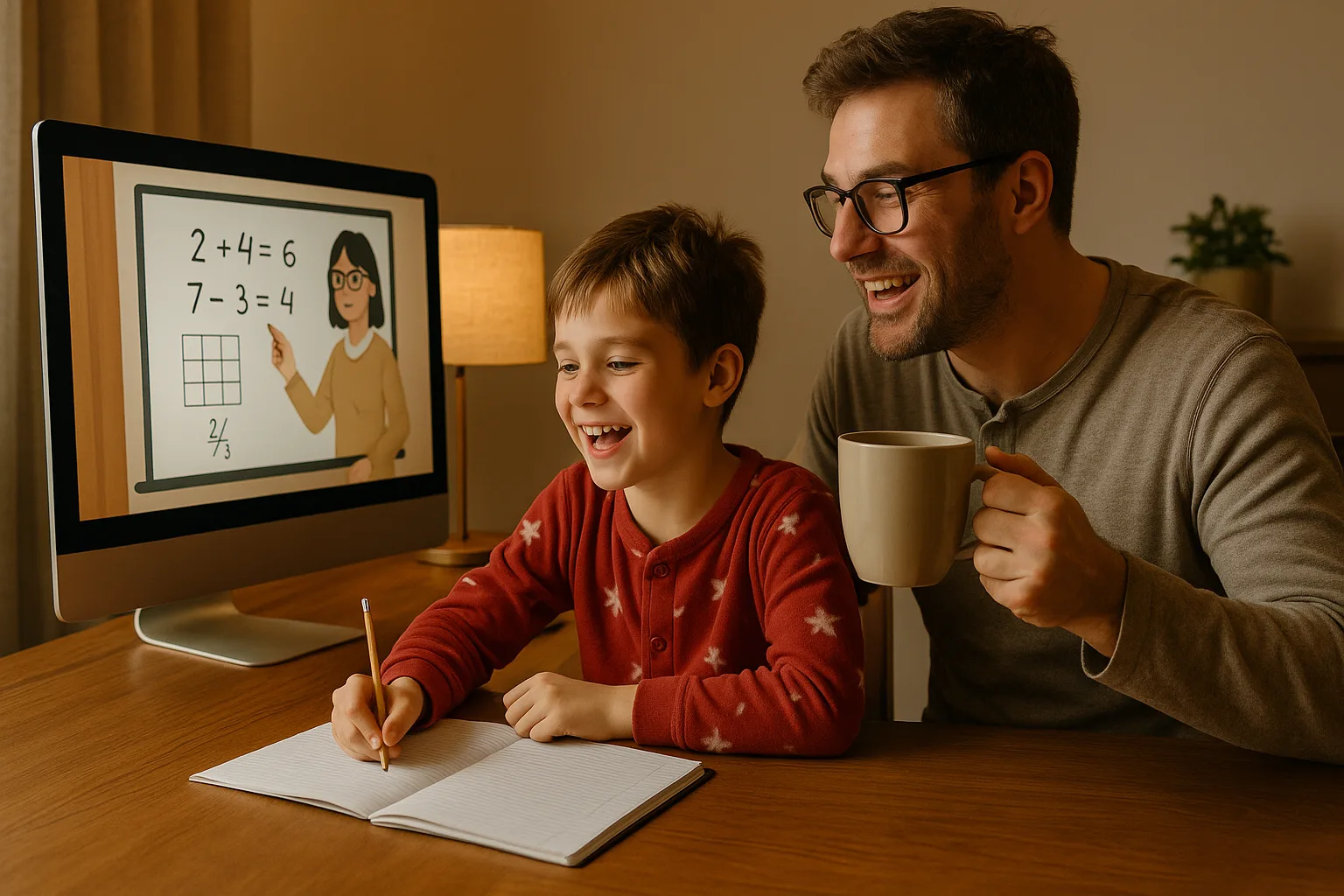
Helping a child build a strong foundation in math during the first two years of school is one of the best gifts a parent can give. Short, consistent, playful activities at home make math meaningful and reduce stress for both child and parent. This guide gives practical, low-cost ideas you can use right away in Volgograd — whether you live near the Volga embankment, a quiet courtyard, or a busy market.
What children typically learn in grades 1–2
—
Focus on understanding, not speed. Main goals:
— Number sense up to 20 (counting, comparing, ordering).
— Simple addition and subtraction (mental strategies and using objects).
— Place value basics (10s and 1s).
— Measurements (length, weight, time) using everyday units.
— Basic geometry and spatial reasoning (shapes, position words).
— Patterns, classification, and logical thinking.
— Solving simple word problems and explaining reasoning.
A simple daily routine
—
— Time: 10–25 minutes per day (younger or tired children may need less).
— Frequency: Short sessions daily are better than long rare sessions.
— Format: Warm-up (2–3 min), focused activity (10–15 min), playful wrap-up (2–5 min).
— Materials: coins, buttons, dice, cards, small toys, paper, pencil — mostly household items.
— Environment: quiet corner, consistent time (after breakfast or before play), positive tone.
Games and activities you can start today
—
1) Number Line Hop (Indoor/outdoor)
— Materials: tape or chalk to mark numbers 0–20 on the floor.
— How: Call a sum or difference (e.g., «Start at 7, add 5»). Child jumps to the answer.
— Variations: Walk backwards for subtraction; time small races for fluency.
2) Grocery Shop Maths (real-life practice)
— Materials: play money or printed labels; a few items from the kitchen.
— How: Price items with small numbers (2, 5, 8). Child “buys” items, adds totals, gives change.
— Extensions: Compare prices, make a list within a budget.
3) Story Problems with Local Flavor
— Example: “On the Volga embankment, 8 boats are docked. 4 more arrive. How many now?” Draw and solve with toys.
— Tip: Keep stories relevant to your child’s world (school, playground, familiar landmarks).
4) Dice Race (Addition/Subtraction)
— Materials: two dice, playing pieces.
— How: Roll both dice, add numbers and move forward that many spaces. For subtraction, start at 20 and subtract.
— Benefit: Builds mental addition and number bonds.
5) Shape Hunt (Geometry)
— Materials: camera or phone (optional), paper.
— How: Walk around the house or yard. Find circles, rectangles, triangles and take photos or draw them.
— Extension: Count sides, sort by corners, build shapes with sticks or straws.
6) Cooking Measurements (Hands-on fractions and measures)
— Activity: Measure 1/2 cup, 1/4 cup, count teaspoons. Let the child help and compare weights/volumes.
— Learning: Estimation, units, sequencing steps (order of operations in a recipe).
7) Domino Patterns and Matching
— Materials: dominoes or homemade cards.
— How: Match numbers, make number chains, or add the two ends and make sums.
— Variations: Create target sums (make 10) to teach complements.
8) Math Bingo (Quick practice)
— Materials: Bingo cards with sums or shapes.
— How: Call out problems; child covers answers. Small prize for completed row.
Scaffolding and questioning techniques
—
— Ask open questions: “How did you get that?” “What else could we try?” “Can you show me a different way?”
— Encourage thinking: If a child is stuck, offer a hint, not the answer — e.g., “What happens if you count from 10?” or “Can you use your fingers or blocks to check?”
— Use manipulatives: Physical objects make abstract ideas concrete (buttons, beads, pasta).
— Praise effort and strategies, not only correct answers: “I liked how you checked with blocks.”
Checking understanding (quick and gentle)
—
— Ask the child to explain in their own words or show with objects.
— Use mini-quizzes of 3–5 varied problems once a week.
— Observe how they solve problems: do they count one-by-one, use number bonds, or guess?
— Keep a simple progress notebook: note dates, activities, and breakthroughs.
Dealing with resistance
—
— Keep sessions short and playful; stop while your child still enjoys it.
— Mix math with a favorite activity (math + drawing, math + walk).
— Offer choices: “Do you want to do a puzzle or a dice game today?”
— Celebrate small wins (stickers, a special walk on the Volga embankment).
Adapting difficulty
—
— Make it easier: use fewer numbers, more objects, or slower pace.
— Make it harder: increase target numbers, combine operations, ask for explanations.
— Progression example for addition:
— Level 1: Add single digits with objects (3 + 4 using beads).
— Level 2: Add single digits mentally (7 + 5).
— Level 3: Add with carrying (13 + 8) using tens and ones.
Using Volgograd as a learning backdrop
—
— Embankment counting: count benches, steps between landmarks, boats — then turn counts into sums.
— Market maths: compare prices at a local market, weight fruit, calculate totals.
— Seasonal ideas: in summer, count sails on the river; in winter, measure snow depth in cups and compare.
— Local outings become math lessons and