Introduction
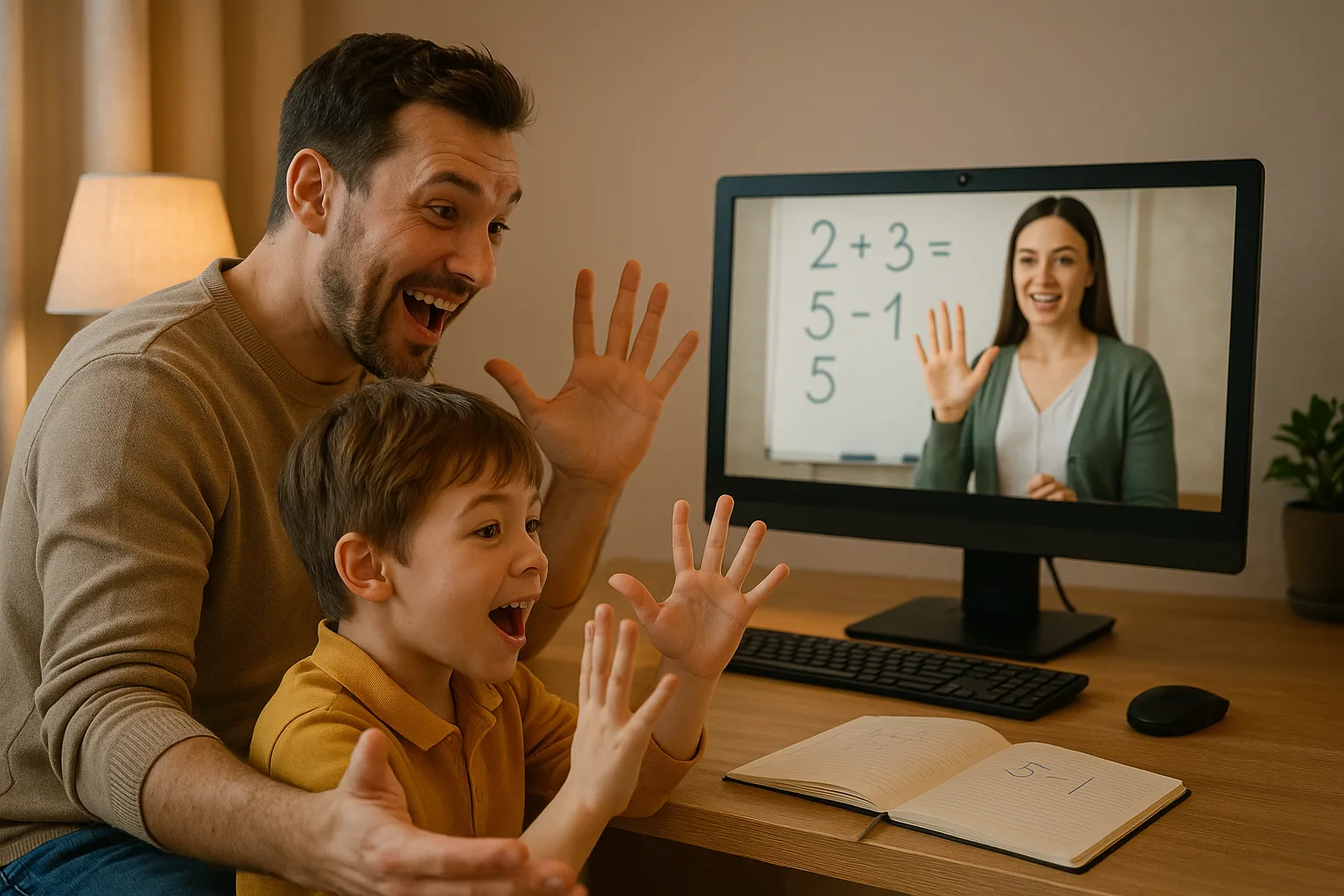
Parents in Volgograd can turn everyday life — the Volga embankment strolls, trips to the market, or a walk up Mamayev Kurgan — into rich, playful math lessons. For children in grades 1–2, math is about understanding numbers, patterns and relationships, not memorizing rules. This article gives practical, low-prep strategies, games, and local ideas to help families build confident, curious young thinkers.
Why home-based math matters
— Children learn best in short, meaningful episodes tied to real life.
— Home learning strengthens emotional safety: mistakes become experiments, not failures.
— Early positive experiences with math reduce anxiety and build a foundation for later school success.
Principles for teaching grades 1–2
— Keep sessions short and frequent: 10–20 minutes several times a week.
— Use concrete objects (toys, bottle caps, coins) before symbols.
— Ask *why* and *how*, not just *what*. Encourage explaining thinking.
— Follow the child’s curiosity; transform everyday moments into mini-lessons.
— Praise effort and strategies, not just correct answers.
Sample weekly routine (flexible)
— Monday: Number play (counting, comparing) — 10–15 minutes
— Wednesday: Addition/subtraction through stories — 10–15 minutes
— Friday: Shapes & measurement with a walk or craft — 15–20 minutes
— Weekend: Family math game (board or outdoor) — 20–30 minutes
Simple, effective games and activities
Each activity lists materials you already have at home.
— Counting walk along the Volga embankment
*What to do:* Count boats, lamp posts, stairs. Compare groups: more/less, how many more?
*Skills:* Counting, comparison, one-to-one correspondence.
— Market math at the Central Market
*What to do:* Give a small budget (in rubles). Let the child choose items, add prices, calculate change.
*Skills:* Addition, subtraction, understanding money.
— Bottle-cap addition/subtraction
*Materials:* Bottle caps, marker.
*What to do:* Label caps with numbers. Make problem cards (e.g., “You have 7 apples, give 3 to a friend — how many left?”) Solve by moving caps.
*Skills:* Concrete operation, mental visualization.
— Shape hunt in the neighborhood
*What to do:* Find rectangles, circles, triangles (windows, manhole covers, roofs). Take photos. Sort by attributes.
*Skills:* Geometry, classification.
— Build-a-number race (indoors)
*Materials:* Dice or a spinner, small toys.
*What to do:* Roll a number. Child builds a tower with that many blocks, then adds/subtracts blocks per extra roll. Add a story element (e.g., animals joining).
*Skills:* Number sense, addition/subtraction, fine motor skills.
— Story problems from local life
*What to do:* Use local contexts («There are 5 boats at the dock; 2 more come — how many now?»). Encourage the child to draw the problem.
*Skills:* Modeling, reading comprehension, arithmetic.
How to explain core concepts simply
— Place value (tens and ones): use sticks bundled into tens (toothpicks or pencils wrapped) and single sticks to show how 12 = 1 ten + 2 ones.
— Addition: start with joining groups (put together two piles of toys), then move to counting on.
— Subtraction: show as taking away, then as difference (compare two groups).
— Doubles and near-doubles: use pairs of socks or shoes to illustrate 3+3 or 3+4.
— Measurement: use a ribbon or step-counts to measure distance; compare lengths by lining objects up.
Developing thinking through questions and challenges
Ask open-ended prompts:
— «How many ways can you make 10?»
— «Show me 7 using your hands, toys, and drawings.»
— «Which is longer? How can we check?»
Encourage multiple strategies and ask the child to explain their steps in simple words.
Supporting children who struggle or resist
— Keep sessions short and playful; avoid pressure.
— Focus on success: choose tasks the child can complete with little help.
— Break problems into steps and use visuals.
— Use frequent, specific praise: «You counted by twos carefully!»
— If difficulties persist, talk to the school teacher for guidance and consider local tutoring support.
Local resources in Volgograd (where to go and what to try)
— Libraries: Volgograd Regional Universal Scientific Library (named after M. Gorky) often has children’s corners and seasonal activities. Check their schedule for reading and activity hours.
— Museums and parks: a walk up Mamayev Kurgan or along the Volga embankment is a great context for counting, measurement and shape hunts.
— Markets and shops: Central Market and neighborhood stores are perfect for practical money-work and estimation games.
— Local playgroups and parent communities: look for mother-and-child centers or VK (VKontakte) groups for Volgograd parents sharing game ideas and swapping materials.
— Low-cost materials: craft stores and markets sell beads, ribbons and small containers good for sorting and measuring tasks.
Quick activity bank by concept
— Counting & place value: group beads into tens and ones, make “number trains” with toy cars.
— Addition & subtraction: lunchbox problems (add fruits, remove cookies), domino addition.
— Shapes & patterns: bead bracelets (patterns), fold paper to make shapes, create mosaic from cut paper.
— Measurement & estimation: estimate how many