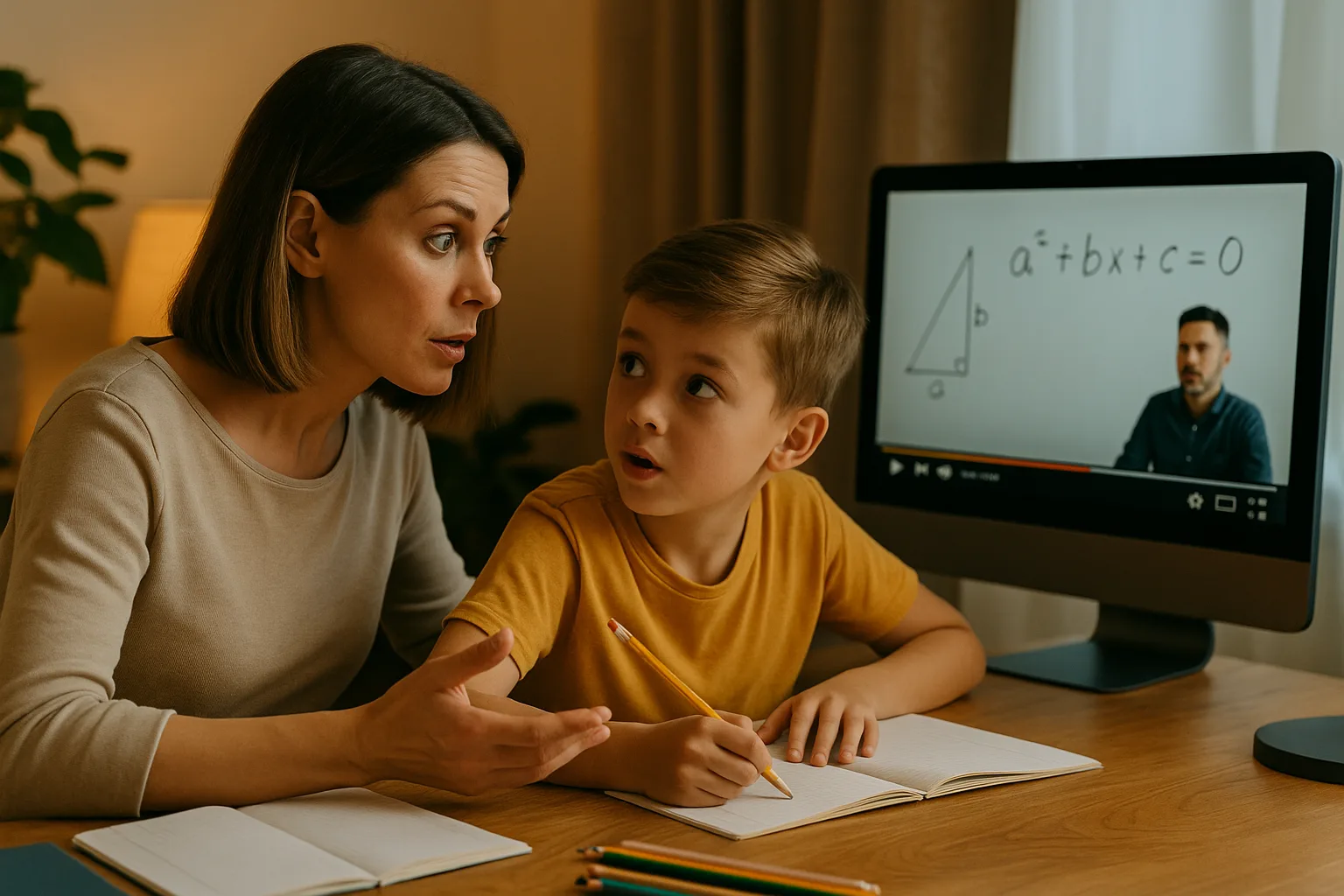
Why home-based math matters (for Volgograd families)
Helping a child in grades 1–2 to understand math is less about drills and more about *thinking*. At home — in the kitchen, on a walk by the Volga, or while shopping at a local market — parents can turn ordinary moments into powerful learning. This guide gives concrete games, daily routines, local ideas, and questions that develop number sense, reasoning, and confidence.
What to focus on in Grades 1–2
— Number sense to 20 (and beginning to 100): counting, comparing, order
— Addition and subtraction within 20 (mental strategies, using objects)
— Place value basics: tens and ones (grouping by 10)
— Simple word problems (1–2 steps)
— Measurement (length, weight, time) using everyday tools
— Shapes and spatial reasoning
— Patterns and logical thinking
Simple home materials to have on hand
— Coins (rubles and kopeks) or counters (buttons, bottle caps)
— Paper, pencils, scissors, colored markers
— A ruler or tape measure, kitchen scale, measuring cups
— Small toys or food items (grapes, cereal pieces) for counting
— A clock with hands or a printable clock face
— A notebook to record games and progress
Short games (10–15 minutes) — quick wins
1. Counting Walk
— What: Count steps between two lampposts, or the number of blue cars you see on your street.
— How to extend: Predict first (guess how many) → count → compare guess vs. actual.
— Thinking prompt: “Was your guess too high or low? Why?”
2. Treasure Sort
— What: Mix buttons/bottle caps; sort by size, color, or shape.
— Extension: Make groups and ask which group has more/less.
— Thinking prompt: “How do you know this group is bigger?”
3. Story Problems While Cooking
— What: “We have 8 strawberries and add 5 more — how many now?”
— Use real food to show addition/subtraction.
— Thinking prompt: “Is there another way to find the answer?”
4. Clock Race
— What: Move clock hands and ask child to tell the time or show “30 minutes later.”
— Start with hours and half-hours.
— Thinking prompt: “How many minutes between 2 and 3?”
Longer activities (20–40 minutes) — build reasoning
1. Shopkeeper Game
— Set up a pretend shop with price tags in rubles/kopeks. Give child some coins.
— Tasks: Buy items, calculate change, compare prices.
— Skills: Addition, subtraction, understanding currency.
— Variation: Make simple receipts and add totals.
2. Build-a-Tower (Place Value)
— Use sticks or pencils: bundle 10 as one “ten” and single sticks as “ones.”
— Give numbers (e.g., 23) and have child build them; then exchange 10 ones for a ten.
— Thinking prompt: “If we add 7 more ones to 23, how many tens and ones?”
3. Math Detective (Word Problems)
— Write 3 short stories (lost toys, found apples). Child draws or acts them out, then solves.
— Focus on which operation to use and why.
Teaching moves: questions that develop thinking
— Before calculating: “What do you notice? What do you need to find out?”
— Make a plan: “How could we solve this? Can you show me?”
— Ask for explanation: “Why did you do it that way?”
— Encourage multiple methods: “Is there another way to solve it?”
— Predict and reflect: “What will happen if…? Did it turn out as you thought?”
Integrating math into daily life in Volgograd
— At local markets: measure, compare prices, count change.
— On walks near the Volga: estimate distances, count benches, compare groups of birds.
— During visits to museums or planetarium: talk about scales, timelines, and maps (ask staff for family activity sheets).
— Use local library branches or community centers for story hours that can include counting books — check municipal library listings (поиск по библиотекам Волгограда).
Supporting a reluctant learner
— Keep sessions short and playful; end on success.
— Avoid correcting too quickly; ask the child to explain first.
— Praise strategies and effort, not only correct answers.
— Use their interests (cars, animals, football) to create math tasks.
Sample weekly routine (for busy families)
— Daily: 5–10 minute counting or quick game (morning or evening).
— 2× week: 15–20 minute focused activity (shopkeeper, tower, clock).
— Weekend: 30–40 minute themed session (baking, market trip, museum visit).
— Record: A short note in a notebook about what was tried and any breakthroughs.
Tracking progress (simple and friendly)
— Keep a notebook with dates and one sentence: “What we played / what they could do / next step.”
— Use small visual stickers or a star chart to celebrate effort.
— Look for changes: faster counting, using tens when adding, explaining solutions.
Where to find more resources in Volgograd
— Local libraries and cultural centers: ask about children’s programs and reading/math clubs.
— Search for parent groups on VKontakte or Telegram (e.g., “родители Волгоград”) to swap ideas and secondhand materials.
— School teachers and the district education office (районный отдел образования) can recommend worksheets and books aligned with the school curriculum.
— Online interactive sites and apps (look for child-safe, grade-appropriate resources in Russian) for extra practice on bad-weather days.
Quick tips for parents
— Be curious with your child — model thinking aloud.
— Use real objects before abstract symbols.
— Make mistakes together and