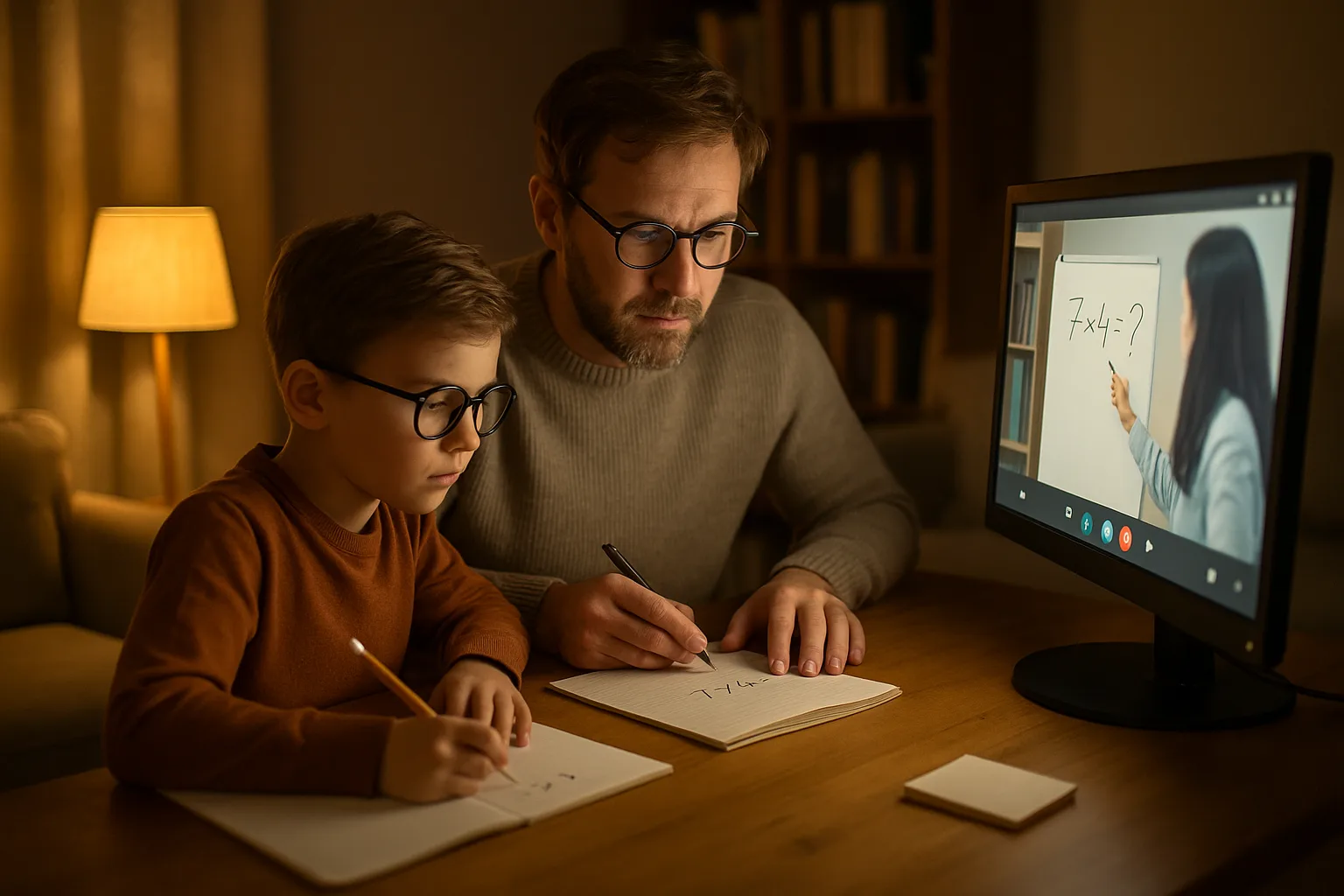
Why home-based math matters
Home is where children first make sense of numbers. For families in Volgograd, turning everyday life into short, playful math moments helps children in grades 1–2 build solid number sense, confidence, and a positive attitude toward school math. Small, consistent activities are more effective than long, formal lessons.
Principles to follow
— *Keep it short and regular*: 10–20 minutes of focused activity most days.
— *Make it playful*: games beat worksheets for building thinking.
— *Make it meaningful*: use local context (home, neighborhood, Volga riverfront, Мамаев Курган) to explain concepts.
— *Celebrate effort, not only result*: praise strategies and persistence.
— *Follow the child’s tempo*: if they get tired, switch to a softer activity.
A simple weekly plan (example)
— Monday: Counting and number games (10–15 min)
— Tuesday: Shapes & spatial thinking (15 min)
— Wednesday: Addition practice through play (15–20 min)
— Thursday: Subtraction & comparison (15 min)
— Friday: Measurement & real-world math (walk/play in the yard)
— Weekend: Family math game (board game, cooking with measurements)
Daily 10–20 minute lesson templates
1) Number talk (10 min)
— Ask: “How many windows are on our street-facing side?” Count together.
— Ask follow-up: “If one more window had flowers, how many would there be?” (introduces +1)
2) Addition story (15 min)
— Use toys or snacks: “You have 3 boats on the Volga and your friend brings 2 more. How many?”
— Let the child build and recount; draw or write the equation 3 + 2 = 5.
3) Shape walk (15 min)
— Walk around the block or park and identify shapes: “The bridge arch looks like a half-circle.”
— Draw the shapes you find on a quick sketch.
Games that develop thinking
— “Find and Count”: give a target number (7) and collect exactly that many leaves, pebbles, or sunflower seeds.
— “Who Has More?”: compare groups quickly — no counting from 1 each time, encourage estimation and strategies.
— “Number line hop”: tape numbers 0–10 on the floor and ask the child to hop to show + or − moves.
— “Marketplace”: role-play buying small items with faux rubles (introduces coins, addition/subtraction).
— Puzzles and tangrams: build spatial reasoning and shape composition.
Concept-focused mini-activities
— Place value: use sticks bundled in tens and single sticks for ones (10-sticks = one bundle).
— Addition strategies: teach making tens (e.g., 7 + 5 = 7 + 3 + 2) using counters.
— Subtraction as “take away” and “compare”: practice both with toys.
— Measurement: measure height with paper strips, time short tasks with a stopwatch, cook simple recipes to measure ingredients.
Materials you likely already have
— Small toys, buttons, peas or sunflower seeds, empty containers
— Paper, marker, tape for a floor number line
— Kitchen scale or measuring cup for cooking math
— Simple puzzle/tangram set (DIY from cardboard)
— Notebook for a weekly “math diary”
Using Volgograd as a learning context
— Count tram stops or bus stops on a short route and add/subtract stops.
— Measure the length of a small walk along the Volga embankment using steps or a pedometer.
— Use Мамаев Курган steps as an opportunity for counting, comparing heights, or estimating how many steps remain.
— Visit local libraries or children’s centers for story-times that include counting or logic games; check municipal offerings in your district.
Digital and printed resources (suggestions for parents)
— Russian platforms for grades 1–2: Учи.ру, ЯКласс — short, curriculum-aligned exercises.
— International apps: Khan Academy Kids for playful foundational math (use alongside Russian practice).
— Printed workbooks: choose those recommended by your child’s school program; use them sparingly and make pages into games.
When to seek extra help
Look for persistent signs (for several months) such as:
— Trouble with number recognition or counting to 20, despite regular practice
— Big anxiety or avoidance of simple math tasks
— Difficulty following one-step math instructions
If concerned, talk with your child’s teacher, school psychologist, or a local tutor; early intervention is effective.
Supporting your child emotionally
— Stay calm and curious: ask *how* they thought about the problem.
— Show your own mistakes: “I made a mistake — let’s fix it together.”
— Reward process: “I liked how you tried three ways to solve that!”
— Keep sessions fun and varied — short wins build confidence.
Quick sample 15-minute lesson (concrete)
1. Warm-up counting song (2 min).
2. Hands-on: 8 stones + 4 stones — make two groups and count (6 min).
3. Strategy talk: “How did you count? Could we make 10?” (5 min).
4. Closing: draw the stones and write 8 + 4 = 12 (2 min).
Tracking progress simply
— Weekly 2–3 minute check: oral counting, simple addition/subtraction facts, and a shape naming.
— Keep a small notebook: note what the child did, what went well, and one next-target.
Community and local support in Volgograd
— Ask your child’s teacher about municipal enrichment classes.
— Check the nearest public library for children’s programs.
— Look for parent groups on local social networks (VK, Telegram) to swap ideas and plannings.
— Consider short-term tutoring if