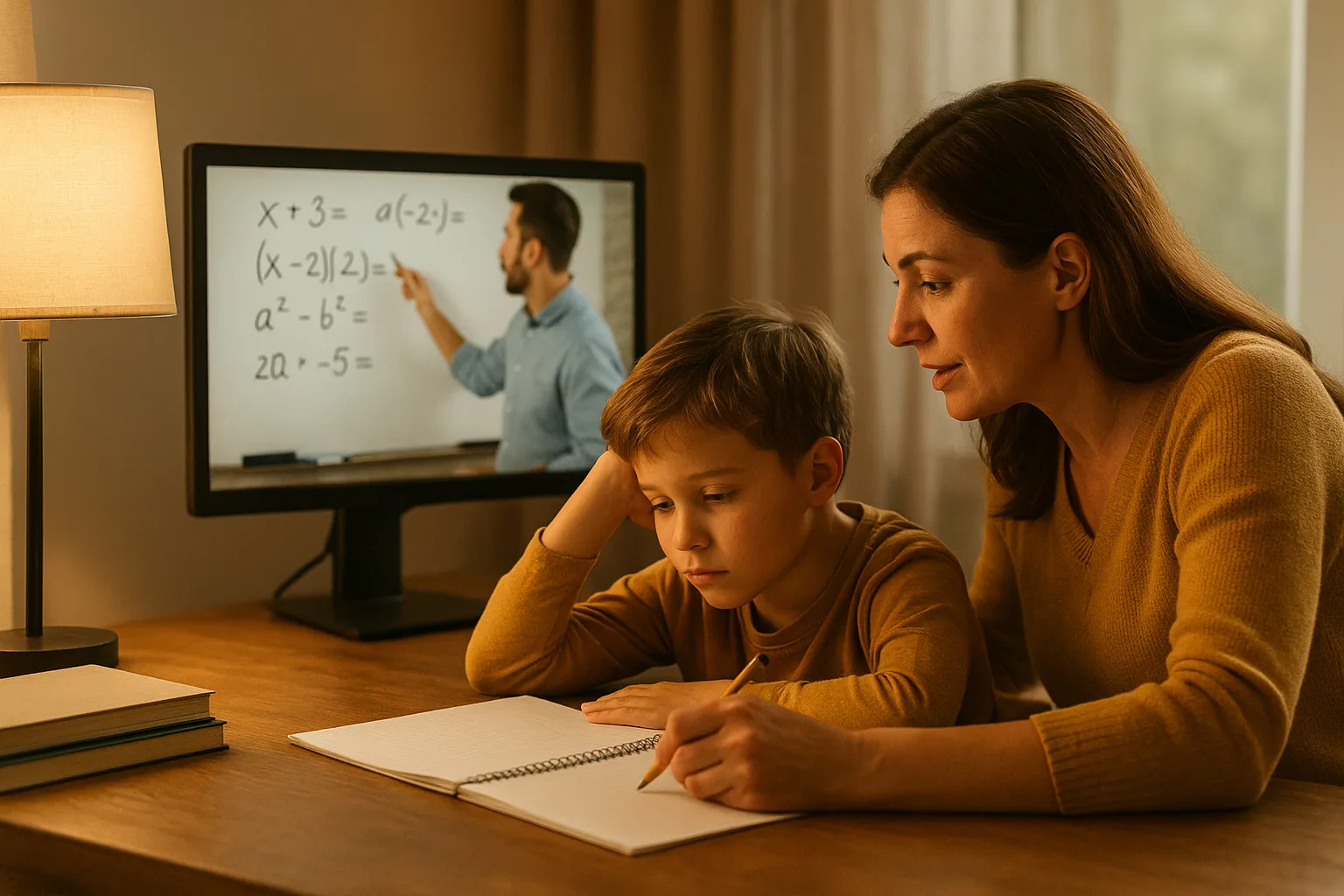
Why home-based math matters (for Volgograd families)
Helping a first- or second-grader understand math isn’t about drills — it’s about curiosity, conversation, and short playful tasks that build thinking. In Volgograd, everyday life — from counting stalls at the Central Market to measuring the length of a stick on the Volga embankment — gives rich, free moments for math learning. With small, consistent efforts at home, parents can turn ordinary routines into strong foundations for school success.
Big-picture goals for grades 1–2
Focus on these key skills:
— *Number sense*: recognizing quantities, comparing numbers, and understanding part–whole relationships.
— *Basic operations*: fluent addition and subtraction within 20; beginning strategies for mental math.
— *Measurement and comparison*: length, weight, time, and height using non-standard and simple standard measures.
— *Shapes and spatial thinking*: recognizing and composing simple shapes.
— *Problem-solving and explanation*: making sense of word problems and explaining solutions.
Short daily routine (10–20 minutes)
— Warm-up (2–3 min): Quick counting, reciting number bonds, or a “number of the day” question.
— Focus activity (8–12 min): One targeted game or problem (see examples below).
— Wrap-up (2–3 min): Ask the child to explain what they did; praise effort and clear thinking.
Keep sessions consistent and upbeat — more important than length.
Games and activities you can try today
All use common materials: coins, buttons, toys, paper, chalk.
1. Shopkeeper at the market (goal: addition/subtraction, real money sense)
— Set up a «shop» with 6–8 items (fruit, toys) and price tags (1–9 roubles).
— Give your child a small amount of coins/notes. Ask them to buy two items and count change.
— Variation: Make receipts and solve “how much left?” word problems.
2. Number detectives (goal: number sense, comparison)
— Hide numbered cards around a room or on a walk along the Volga promenade.
— Give clues: “Find a number that is 2 more than 7” or “Find an even number less than 10.”
— Discuss why they chose that number.
3. Hopscotch sums (goal: mental addition)
— Draw hopscotch with sums or numbers. Child hops and solves the sum they land on.
— Use addition for Grade 1–2 (e.g., 7+3) and simple subtraction for Grade 2.
4. Make-a-story with toys (goal: word problems, logical thinking)
— Use 6 toy cars: “Three went to the museum, two to the park. How many are still at home?”
— Ask your child to draw the story, write the equation, and explain.
5. Measure the route (goal: measurement, estimation)
— Walk from home to a nearby landmark (a bench, statue); estimate steps or length in meters.
— Count steps, then measure stride length together to convert steps into meters.
6. Shape builders (goal: geometry, composition)
— Use blocks to build pictures (houses, boats). Ask which shapes they used and how two shapes make another.
7. Memory pairs with math facts (goal: fluency)
— Card game: pairs are sums and matching answers (e.g., 8+4 and 12). Turn and match.
Using Volgograd life as math lessons
— Market math: Weighing, comparing prices, making change.
— Public transport: Count stops, estimate time, compare fares.
— Parks and squares: Use sticks or footsteps to measure distances; compare heights (who’s taller and by how many centimeters).
— Festivals and museums: Estimate crowd sizes, count items in exhibits, create simple surveys.
How to support thinking (not just answers)
— Ask open questions: “How did you decide that?” “Can you show me another way?”
— Encourage explanation with drawings or physical objects.
— Accept mistakes as thinking evidence: say “Interesting — what made you think that?” rather than correcting immediately.
— Break tasks into steps: model one step, then ask the child to try the next.
Materials and local resources (Volgograd)
— Use everyday items: coins, buttons, pasta, matchboxes, tape measure, chalk.
— Local libraries and cultural centres often have children’s corners and activities — check the Central City Library or neighbourhood libraries for workshops.
— Look for parent communities online (social media groups in Volgograd) to exchange ideas and gently support each other.
— If extra help is needed, consider short-term tutoring or small-group classes at local educational centres; prioritize places that emphasize play and conceptual understanding.
A simple weekly plan (example)
— Monday: 15-min counting and number bonds game.
— Tuesday: 20-min shopkeeper + change problems.
— Wednesday: Outdoor measuring walk (15–20 min).
— Thursday: Hopscotch sums (15 min) + explain thinking.
— Friday: Story problems with toys (15 min).
— Weekend: Fun family activity — cooking (measure ingredients), baking, or a visit to a park for measuring games.
Troubleshooting common challenges
— If your child resists: shorten sessions to 5–7 minutes and make it playful. Follow their interests.
— If they rush: ask them to show or draw how they solved it. Encourage one slower, careful strategy.
— If they get frustrated: step back, play a low-stakes game (sorting, matching), and return later.
— If you’re unsure how to help: ask the teacher for key targets for the term and practice those skills briefly at home.
Final tips for parents
— Regular short interactions beat long sessions. Ten cheerful minutes most days works wonders.
— Focus on thinking: ask “why” and “how,” not just “what.”
— Celebrate strategies and effort, not just right answers.
— Use Volgograd’s everyday places as learning labs — the city offers simple, meaningful contexts for math.
Start small: pick one game from above and try it tonight. Observe how your child explains their thinking — that observation is the most powerful guide for what to do next.