Introduction
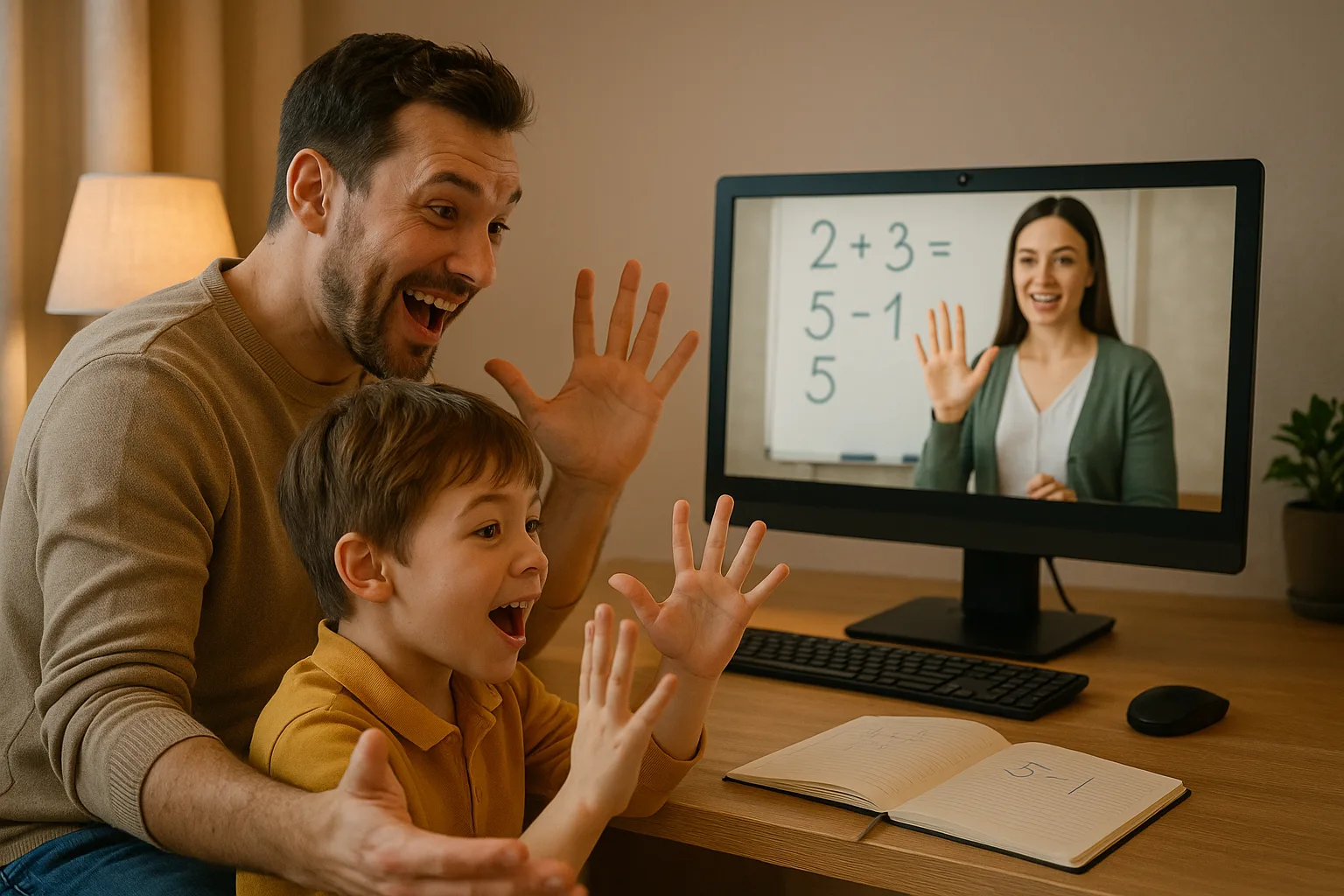
Helping a young child learn math at home is less about formal lessons and more about building curiosity, confident thinking, and everyday practice. This guide focuses on simple, enjoyable ways parents in Volgograd can support 1st–2nd graders in understanding core math concepts through play, daily routines, and conversation.
What children in Grades 1–2 need to know (overview)
— Number sense: counting fluently, recognizing numerals, comparing quantities
— Place value: tens and ones (understanding groups of ten)
— Addition and subtraction within 20 (strategies, facts, mental math)
— Simple word problems (translate real situations into math)
— Shapes and spatial awareness (2D shapes, basic symmetry)
— Measurement and comparison (length, mass, volume—using nonstandard and standard units)
— Patterns and logical thinking
How parents help — core principles
— Build on play and everyday moments rather than forcing long drills.
— Ask open-ended questions: *How did you think of that?* *Can you show me another way?*
— Focus on strategies and understanding, not only correct answers. Praise effort and reasoning.
— Use short, regular sessions (10–20 minutes) that fit family routines.
— Use household objects and the local environment as math tools.
Quick daily routine (sample)
— Morning: 5–10 minutes counting or calendar talk (days, date, weather).
— Afternoon: 10–15 minute hands-on activity or game.
— Evening: 5 minutes on a quick story problem (talk it through together).
— Weekend: A longer math walk or project (30–45 minutes).
Game ideas and activities (ready-to-use)
1. Counting Walk along the Volga
— What you need: nothing (or a notebook), comfortable shoes.
— Activity: Count steps between two landmarks (e.g., bench to lamp post) or count boats you see. Ask child to estimate first, then count.
— Skills: estimation, counting, comparing estimate vs. result.
2. Market Math (using play or real rubles)
— What you need: coins/notes or paper money, small toys/fruit.
— Activity: Set prices (e.g., 3 rubles apple, 5 rubles toy). Child “buys” items and makes change. Trade roles.
— Skills: addition, subtraction, place value, real-life context.
3. Ten-Frame Treasure Hunt
— What you need: 10-frame printable or a tray and 10 small items (buttons, beans).
— Activity: Show numbers as full frames and missing parts (e.g., “Make 7” and show 3 empty). Use two trays to demonstrate tens and ones (grouping by ten).
— Skills: subitizing, composition of numbers, place value.
4. Shape Detective in the Neighbourhood
— What you need: camera/phone or sketchbook.
— Activity: Spot shapes on buildings, signs, playground equipment. Take photos and sort by shape.
— Skills: geometry vocabulary, observation, classification.
5. Story Problem Theatre
— What you need: toys or drawings.
— Activity: Act out short word problems (e.g., “Sasha had 8 balloons, 3 flew away—how many left?”). Encourage child to show and explain solution.
— Skills: translating language to math, reasoning, communication.
6. Pattern Train
— What you need: colored blocks or beads.
— Activity: Build repeating patterns (red-blue-blue, repeat). Ask child to continue or create their own and challenge you.
— Skills: pattern recognition, prediction, sequencing.
Materials you already have at home
— Coins, buttons, beans, blocks, paper, crayons, kitchen measuring cups, a ruler, small toys, boxes.
— Use local items: seeds or sunflower kernels (common and tactile), public-transport tickets for counting, postcards of Volgograd landmarks for sorting.
Supporting thinking (questions to use)
— “How did you get that answer?”
— “Can you show me with objects?”
— “Is there another way to solve it?”
— “How do you know your answer is right?”
— “What happens if we change…?” (e.g., add 2 more, remove 1)
When to step back vs. step in
— Step in when child is stuck: give a hint, model one step, or offer a simpler version.
— Step back when child is trying a reasonable strategy—even if slow or different—encourage and ask them to explain.
— Avoid rescuing: let them make small errors and use them as learning moments.
Tracking progress (simple, non-stressful)
— Keep a small notebook: record one success and one “next step” each week.
— Celebrate progress with tangible experiences (a library visit, a math walk in a new neighbourhood).
— If consistent difficulty appears (e.g., trouble with number relations, persistent anxiety), talk with your child’s teacher for targeted support.
Weekly mini-plan (example)
— Monday: Counting & number games (10–15 min)
— Tuesday: Ten-frame or place-value activity (10–15 min)
— Wednesday: Shape and spatial play (10–20 min)
— Thursday: Story problems and talking math (10–15 min)
— Friday: Measurement in the kitchen (baking or pouring, 20–30 min)
— Saturday or Sunday: Math walk or family game night (30–45 min)
Local supports in Volgograd (how to find them)
— Check with your child’s school teacher for recommended materials aligned with the curriculum.
— Visit local libraries or community centers for children’s books and activity groups.
— Look for parent communities and playgroups on social networks for Volgograd families—these often share ideas and swap materials.
Recommended online resources (general)
— Interactive practice and videos in Russian/English (search for child-friendly math resources like Khan Academy Kids, local-language YouTube channels, or educational apps).
— Printable ten-frames, simple worksheets, and game ideas—many are free and adaptable.
Final tips for busy parents in Volgograd
— A few minutes every day beats a long session once a week.
— Make math a normal part of family life: cooking, shopping, travel, and play.
— Keep activities joyful and low-pressure; learning sticks when curiosity is alive.
— Use local walks and everyday objects to make math concrete and meaningful.
If you’d like, I can prepare a printable one-week activity sheet tailored to your child’s current level (beginner with numbers to 10, or ready for addition to 20) or suggest simple Russian-language story problems featuring familiar Volgograd scenes. Which would you prefer?